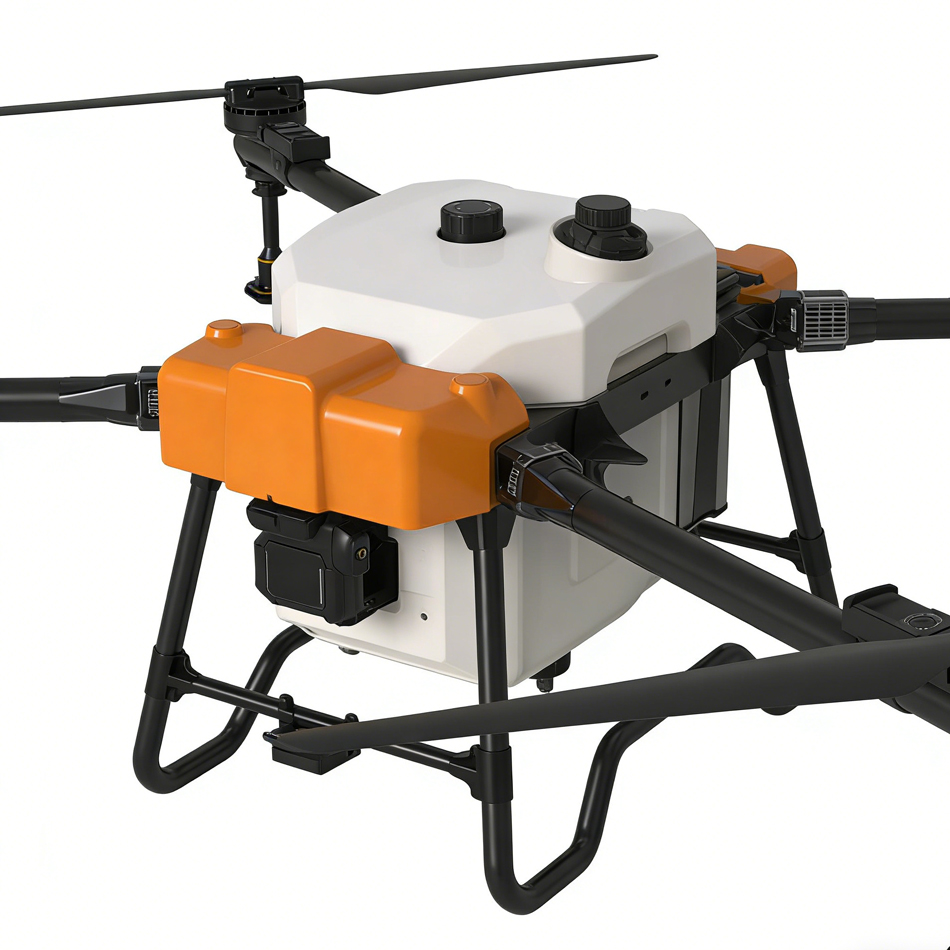
Agricultural unmanned aerial vehicle (UAV) is an unmanned aerial vehicle specially designed for agricultural production scenes, which belongs to the category of intelligent agricultural machinery and equipment and is the product of deep integration of technology and agriculture. It takes the precise navigation flight control system and stable power system as the core, and cooperates with professional load equipment that meets the needs of agricultural operations. Through manual remote control, preset routes or AI autonomous navigation, it completes all kinds of aerial agricultural operations, breaking the ground limitations of traditional farming and becoming the core force to promote the transformation of agriculture from "traditional extensive" to "accurate and efficient".
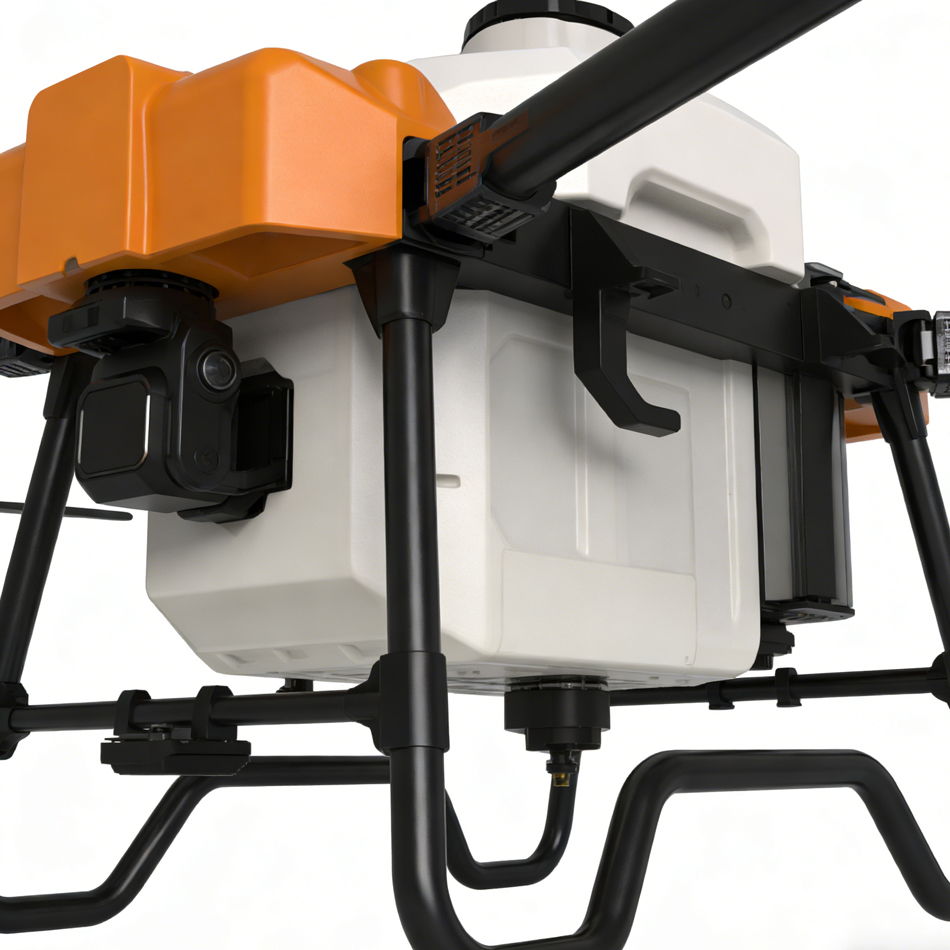
Different from ordinary consumer drones, agricultural drones fully fit the complex environment of agricultural production in design, and the fuselage is made of waterproof, dustproof, anti-falling and anti-interference materials, which can adapt to the working conditions of high temperature, high humidity, dust and obstacles in farmland and ensure stable operation in various complex scenes. At the same time, its carrying capacity, battery life and operation accuracy have been professionally optimized, which is completely different from consumer drones used for entertainment and aerial photography. It is an "airborne agricultural machine" truly tailored for agricultural production.
A complete agricultural UAV system is not a single aircraft, but an integrated solution consisting of flight platform, power system, workload, navigation and flight control system, ground control station and supporting equipment. Among them, the flight platform mostly adopts multi-rotor structure, which has strong stability, flexible take-off and landing and no need for special runway; The workload can be flexibly switched according to the requirements, including spraying system, sowing system, high-definition camera, multi-spectral sensor, etc., to adapt to different agricultural operation requirements; The navigation flight control system supports GPS/ Beidou precise positioning, and can realize intelligent functions such as automatic route planning, constant altitude and constant speed flight, continuous operation at breakpoints, and low-power automatic return flight, which greatly reduces the operating threshold.
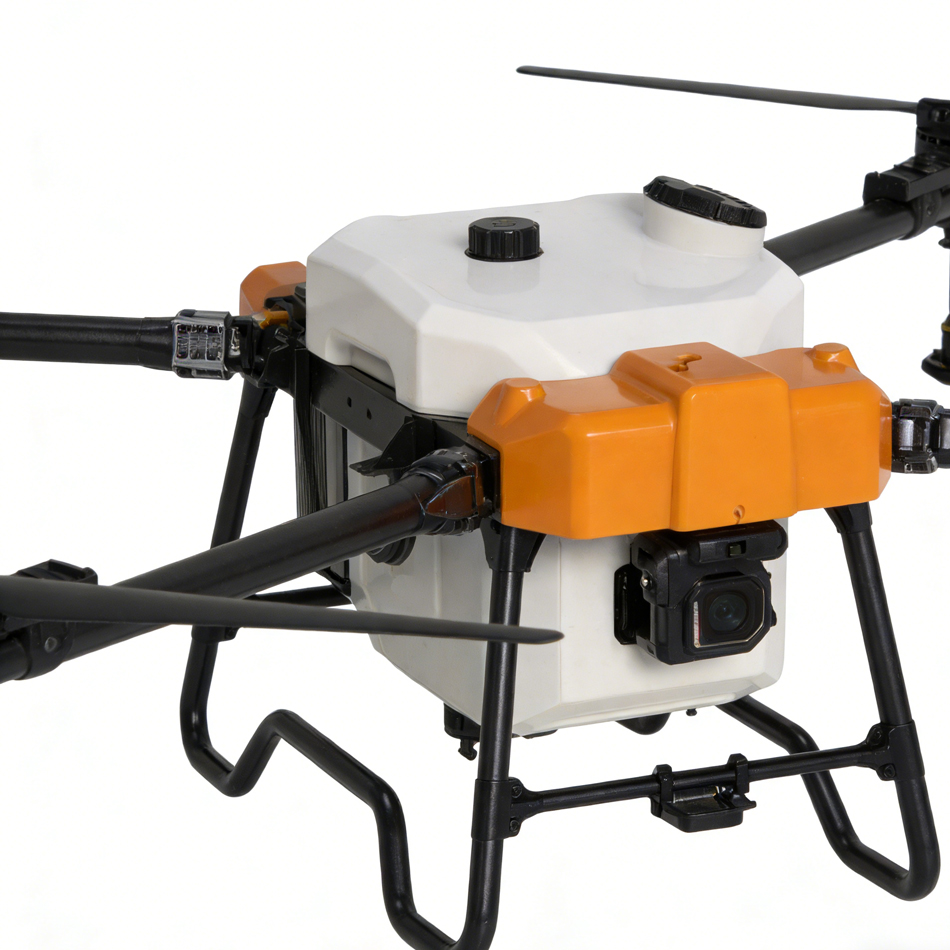
From the working principle, the operation of agricultural unmanned aerial vehicle is very convenient. Operators only need to set parameters such as working area, flying height, working speed, spraying/sowing amount, etc. at the ground control station, and the unmanned aerial vehicle can take off, operate and return autonomously according to the preset program, without a lot of manual intervention. Even people who have no professional flying experience can operate skillfully after short-term training, and truly realize "let science and technology empower farming and make planting easier".
The function of agricultural UAV covers the whole process of agricultural production, and its core can be divided into four categories: first, plant protection spraying, which is used for precise spraying of pesticides, foliar fertilizers and growth regulators, to solve the pain points of low efficiency, serious pesticide waste and unsafe personnel of traditional manual spraying; Second, accurate sowing, suitable for sowing rice, wheat, rape and other crops, as well as uniform sowing of fertilizer and feed, to improve the quality of sowing and fertilization; The third is farmland monitoring, which is equipped with multi-spectral sensors, infrared cameras and other equipment to monitor crop growth, investigate pests and diseases, and detect soil moisture in real time, providing accurate data support for scientific management; Fourth, auxiliary operations, including farmland mapping, crop pollination, disaster assessment, etc., are adapted to all kinds of characteristic agricultural scenes to help agricultural production improve quality and efficiency in all directions.
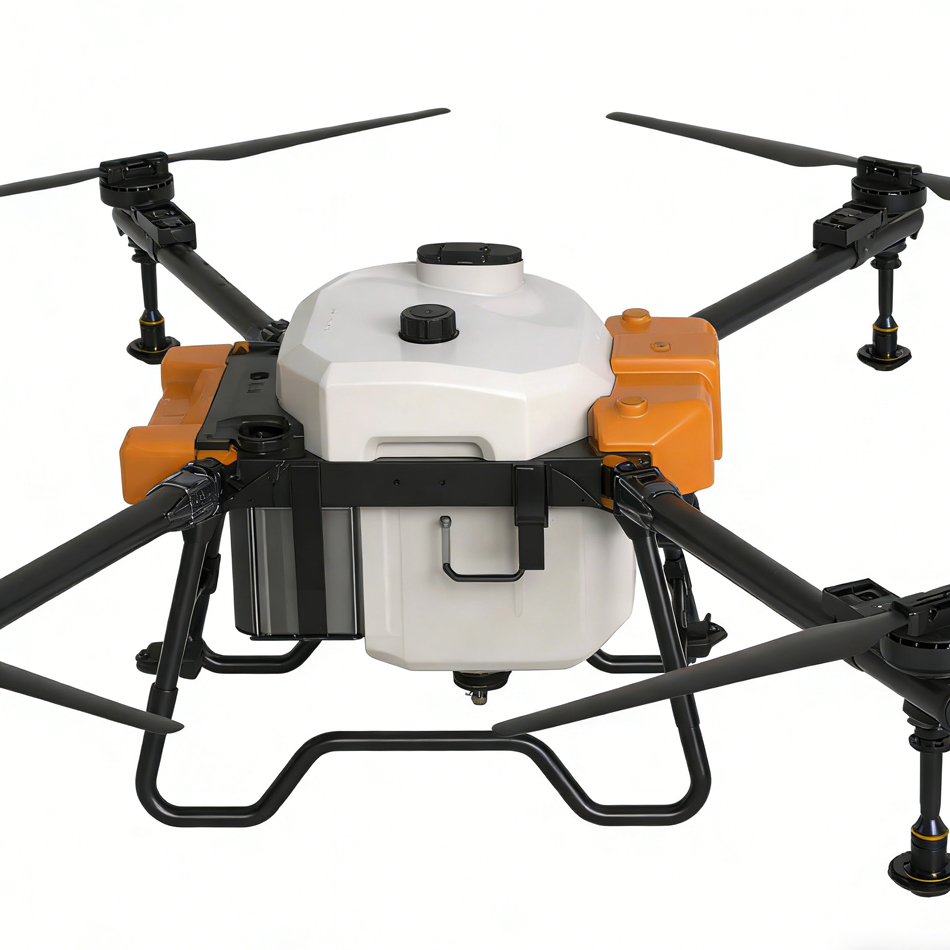
From the perspective of efficiency, the working efficiency of agricultural drones far exceeds that of traditional manual and ground machinery. The working area of a single medium-sized agricultural drone can reach 300-800 mu per day, which is equivalent to the workload of 30-50 skilled workers, which greatly shortens the busy farming period and is especially suitable for large-scale planting areas. For the problem of labor shortage in busy farming season, agricultural drones can quickly make up the position, avoid agricultural delays caused by insufficient manpower, and reduce the risk of crop yield reduction, which is also one of its core values.
From the perspective of cost, agricultural drones can greatly reduce labor costs and resource waste costs. On the one hand, it can replace a large number of labor, alleviate the global agricultural pain points of difficult, expensive and aging labor in busy farming, and save 30%-60% labor costs for long-term use; On the other hand, precision spraying and precision sowing technology can reduce the waste of pesticides, fertilizers and water resources, increase the utilization rate of pesticides by more than 50%, and reduce the water consumption by 90%, which not only reduces the planting cost, but also conforms to the development concept of global green agriculture and sustainable agriculture.
From the perspective of safety and quality, the value of agricultural drones is equally prominent. There are many hidden dangers in traditional manual spraying of pesticides, aerial work and deep water work, while agricultural drones can realize remote operation, avoiding direct contact with pesticides, falling from high altitude, high temperature heatstroke and other risks, and greatly improving the safety of operations. At the same time, precision operation can ensure that pesticides and fertilizers cover crops evenly, improve the effect of pest control and crop growth, thereby improving the quality and yield of agricultural products and helping growers to increase their income.
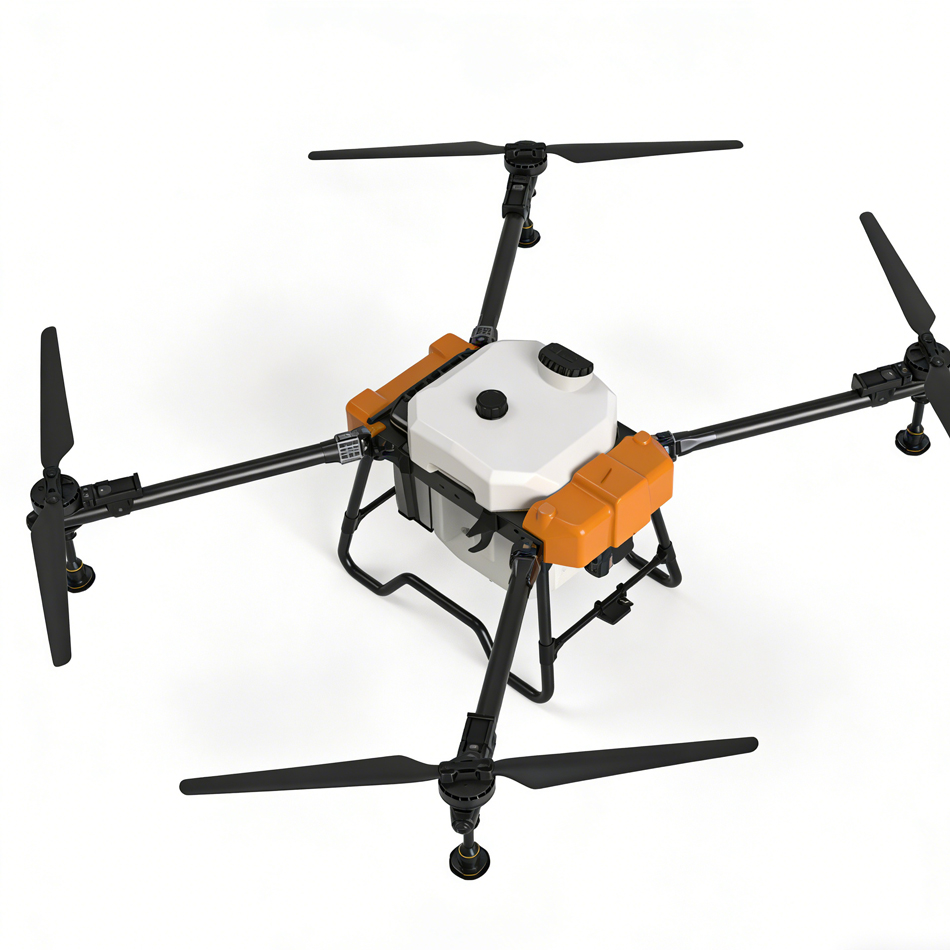
From the perspective of global application and foreign trade market, the value of agricultural drones has been widely verified. At present, agricultural drones have been widely used in more than 100 countries and regions around the world, and they can be seen in rice growing areas in Southeast Asia, large farms in North America, vineyards in Europe and cash crop planting bases in Africa. With its mature technology, perfect industrial chain and high performance-to-price ratio, China agricultural unmanned aerial vehicle (UAV) occupies more than 60% of the global market share, and its export demand continues to rise, which has become a new growth point of foreign trade export and confirmed its core value in the global agricultural market.
To sum up, agricultural UAV is not only a set of efficient and intelligent aerial agricultural machinery equipment, but also an investment that can bring long-term value to agricultural production. Its core advantages of reducing costs and increasing efficiency, improving quality and increasing income, and ensuring safety can completely cover the initial input cost and truly achieve "value for money".