
As the core power equipment in aerospace field, turbojet engine is widely used in many key fields such as military, civil, performance, frontier exploration and so on, with its core advantages of rapid high-speed response, outstanding thrust-to-weight ratio, stable high-altitude performance and strong power output. Different from the traditional propeller power, turbojet engine obtains power by burning fuel to generate high-speed airflow, which can easily achieve supersonic flight and adapt to the complex needs of high altitude, high speed and high maneuverability, and has become an important support to promote the iterative upgrading of the global aviation industry. In recent years, with the continuous maturity of micro turbojet technology, its application scenarios continue to expand. From large military aircraft and passenger airliners to small performance drones and personal flight equipment, turbojet power is infiltrating into every corner of the global aviation industry in a diversified manner, and its broad application prospects continue to attract extensive attention from overseas markets.
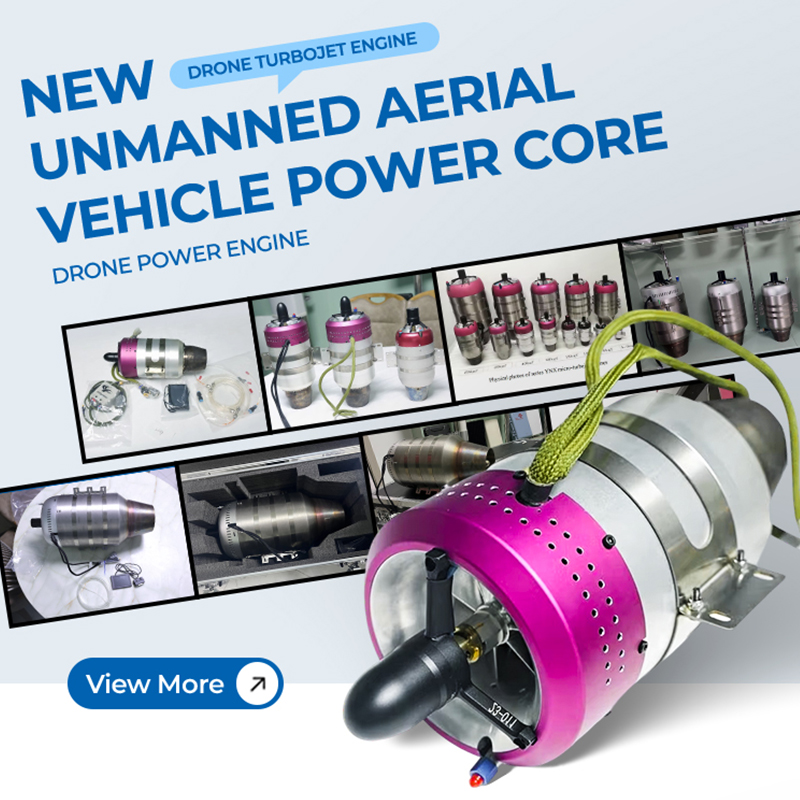
The military aviation field is the core and most mature application scene of turbojet engine. Many classic foreign military equipment are based on turbojet power, which supports the air combat systems of various countries. The American F-16 "Hayabusa" fighter is equipped with GE J85 turbojet engine. The single thrust of this engine can reach 22.2 kN, and the afterburner thrust exceeds 30 kN, which enables the F-16 to fly at Mach 2 supersonic speed and complete difficult tasks such as air combat and ground attack. It has become one of the most widely used and cost-effective light fighters in the world, and has been introduced by many countries and regions. Russia's "geranium -5" high-speed UAV uses a small turbojet engine, with stable power output and strong concealment. The maximum flight speed can reach 600 km/h and the maximum range is over 1,000 km. It can carry reconnaissance equipment or small ammunition to complete tasks such as long-range penetration, battlefield reconnaissance and precision strike, which shows great practicability in actual combat. French "Gust" fighter plane is equipped with SNECMA M88 turbojet derivative engine. After several rounds of technical iteration, the afterburning thrust of this engine can reach 75 kN, which takes into account the high maneuverability of air combat and the dynamic persistence of ground attack. It is the benchmark model of European military aviation and is widely used in the operational deployment of French air force and navy. In addition, American T-38 Avian Claw trainer, Russian MIG -29 fighter and European Typhoon fighter are also equipped with different types of turbojet engines, which have become the core equipment for training pilots and building air combat forces in various countries.
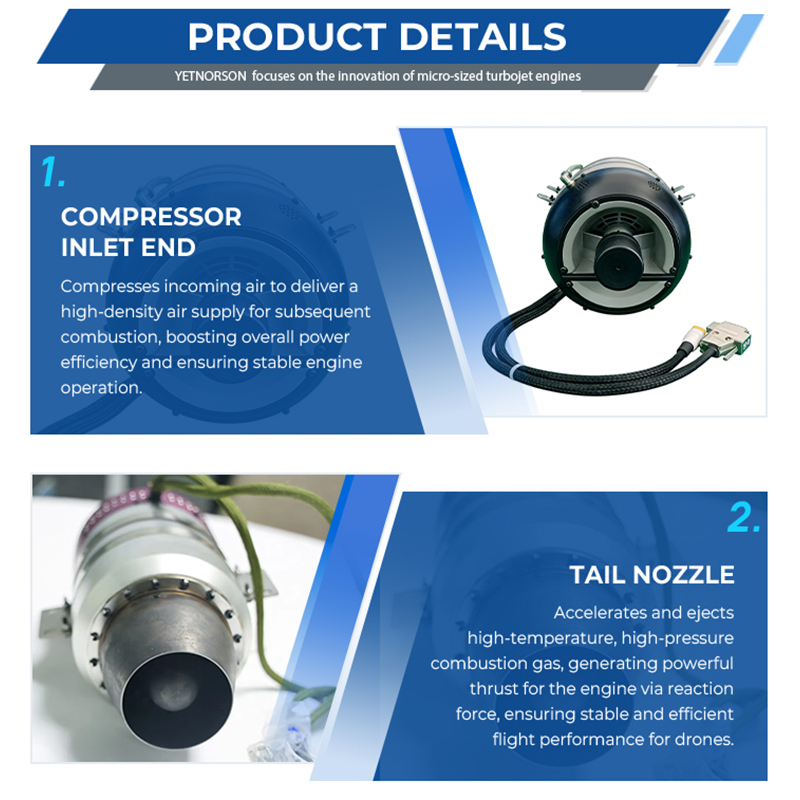
The field of professional air show and performance unmanned aerial vehicle (UAV) is a hot application scene for the rapid rise of turbojet engines in recent years. With the advantages of high speed and high maneuverability, it has become the "eye-catching focus" of international air shows and commercial activities. At the world's top aviation events, such as Farnborough Air Show in Britain, EAA Flyer Conference in the United States and Paris Air Show in France, performance drones equipped with micro turbojet engines frequently appeared, showing extremely impactful aerial stunts. The replica version of the turbojet drone "Firebee" launched by California Model Aircraft Club is based on the design of the classic "Firebee" drone, equipped with a customized micro turbojet engine. The single thrust can reach 5,000 N, and the maximum flight speed is close to 200 km/h. It can easily complete complex stunts such as high-speed crossing, vertical jump, falling leaves and barrel rolling, and restore the flight texture of real fighters, making it one of the most popular performances at the air show. At the Munich Air Show in Germany, the 1:4 scale F-16 real turbojet UAV was equipped with a small turbojet engine. The fuselage was made of lightweight materials, and the dynamic response was rapid, which could accurately restore the classic fighter movements such as "Cobra Maneuver" and "Post-stall Flight". Its smooth handling and realistic appearance became the benchmark model in the European aviation model circle, which led to the research and development boom of the global turbojet performance UAV. In addition, the "Red Arrow" style turbojet formation UAV built by the British professional model airplane team uses multi-machine collaborative control technology to complete the difficult movements such as 9-machine intensive formation, cross flight and smoke-pulling performance at the Royal International Aviation Tattoo Meeting, which pushes the turbojet formation performance to a new height.
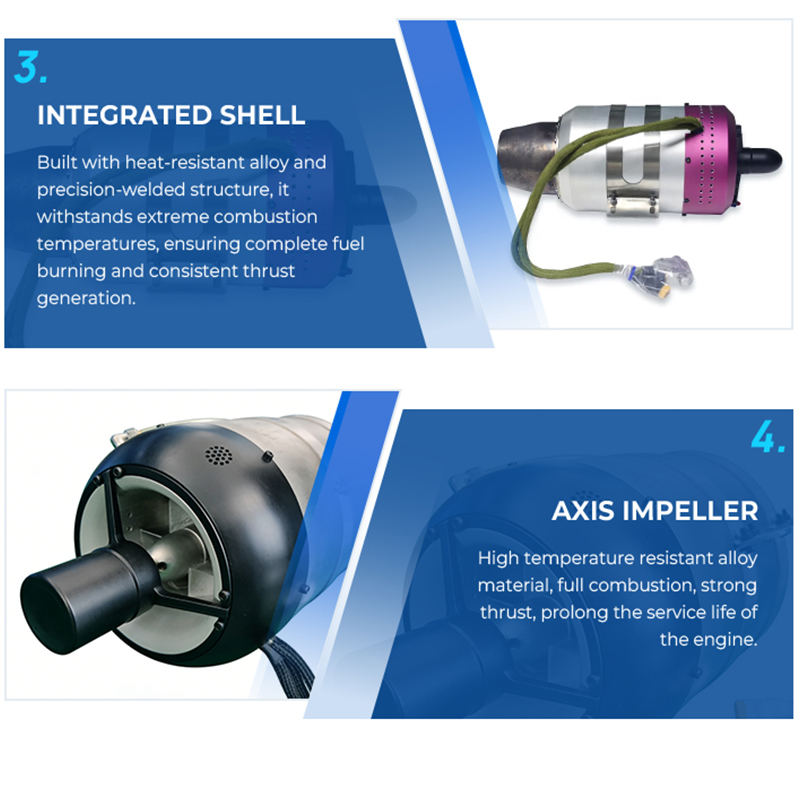
In the field of civil aviation, turbojet engine started the era of civil aviation jet, broke the speed limit of propeller passenger aircraft, and still plays an important role in specific civil scenes. As the world's first jet airliner, the British "Comet" is equipped with four haviland Ghost turbojet engines, each with a thrust of 5.2 kN and a maximum flight speed of 800 km/h, which nearly doubled the speed compared with the propeller passenger aircraft at that time, and opened the jet era of civil aviation trunk flight. Although it gradually withdrew from the market due to early technical defects, it laid a solid foundation for the subsequent development of civil aviation power technology. The early model of Boeing 707 in the United States used Pratt & Whitney JT3C turbojet engine. The single thrust of this engine can reach 62 kN, which enabled Boeing 707 to fly across the Atlantic with a maximum range of over 6,000 kilometers. It became the most mainstream civil aviation trunk model in the world in the 1960s, and promoted the civil aviation industry to enter the stage of large-scale and remote development. In addition, in the field of civil aviation, some private planes and business jets are also equipped with small turbojet engines, such as the early model of Citation X business jet in Cessna, USA, which is equipped with turbojet engines, giving consideration to speed and comfort, and has become an important choice for high-end private travel, further expanding the application scope of turbojet engines in the civil field.
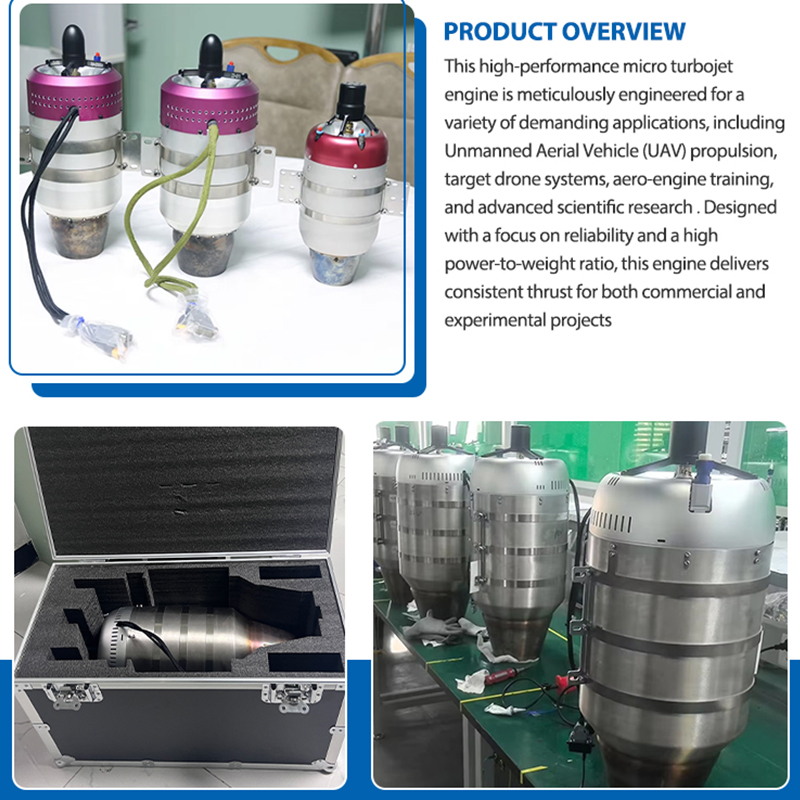
In the field of missiles and targets, small turbojet engines have become the core power of foreign long-range weapons and air defense test equipment, and are widely used in national defense systems. American BQM-34 Firebee drone is the most widely used turbojet drone in the world. It is equipped with GE J69 turbojet engine, and its maximum flight speed can reach Mach 1.5. It can simulate the flight trajectory and flight characteristics of enemy fighters and missiles. It is widely used in air defense weapon testing and pilot training in various countries around the world, and it is still in service in many countries and regions. Russia's Kh-55 series cruise missiles use a small turbojet engine, which is small in size and low in fuel consumption, and enables the missile to achieve long-range low-altitude penetration. The maximum range is over 3,000 kilometers, and it can carry nuclear warheads or conventional warheads. It has become an important part of the Russian military's long-range strike system. Its improved Kh-555 and Kh-101 have further optimized the stability and concealment of turbojet power. In addition, the early models of American Tomahawk cruise missiles and French Flying Fish anti-ship missiles all used small turbojet engines. With strong power and precise control, they became world-renowned long-range strike weapons, highlighting the adaptability and reliability of turbojet power in the field of precision strike.