
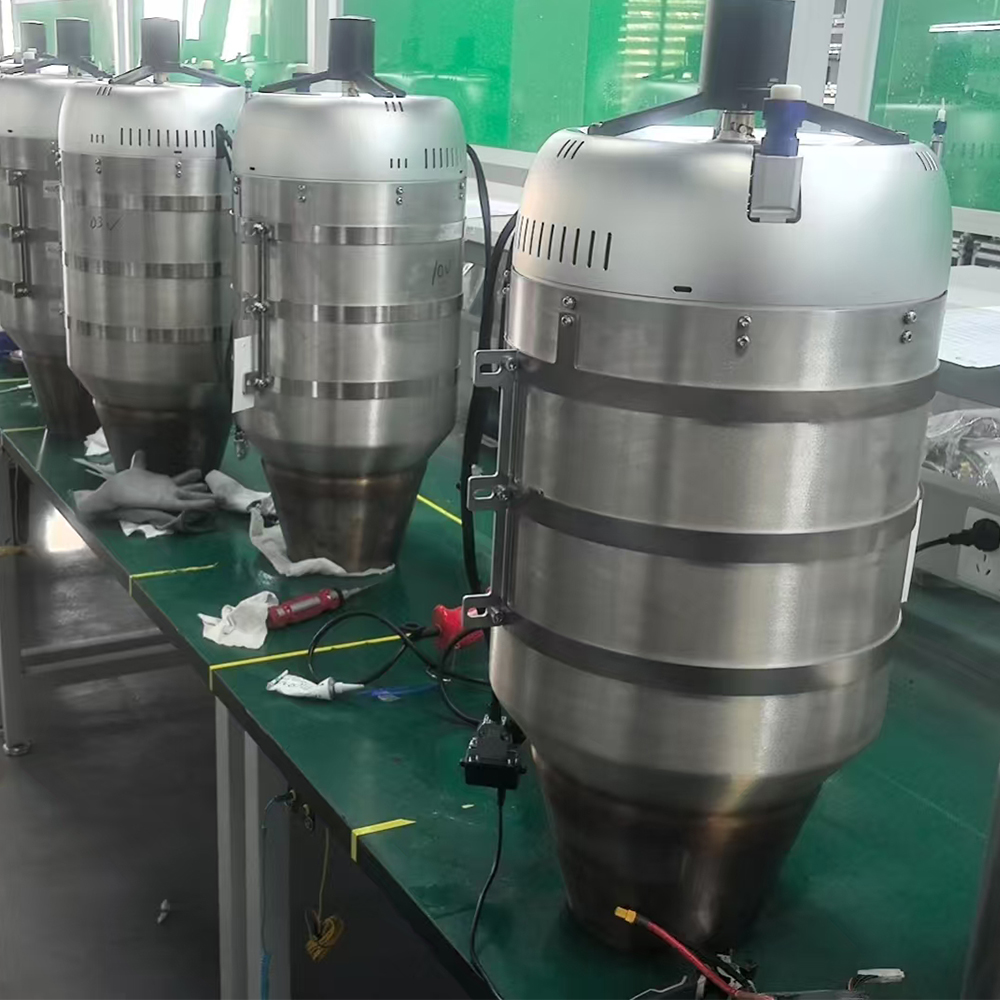
If you've been watching the micro turbojet engine space over the last couple of years, you've probably noticed the shift. For a long time, 80 to 100 kilograms of thrust was where most conversations stopped. Now, 120kg is the number buyers keep circling back to — and the YNX-1200A lands squarely in that class.
It's not about chasing a bigger number for bragging rights. The practical reality is: once you get 120kg of thrust out of a micro turbojet that still fits a tactical UAV, the whole mission envelope changes. You can carry sensor payloads that used to demand a much bigger airframe. You can operate at altitudes that actually matter for ISR work. And you can do it from platforms that don't need a prepared runway. For anyone buying jet engines for high-end unmanned systems — target drones, surveillance platforms, anything mission-critical — this thrust class deserves a close look.
Here's the catch, and it's something experienced buyers learn fast: a 120kg thrust rating on a spec sheet tells you less than you think. What separates a solid turbine engine from one that gives you headaches in the field almost always comes down to a few parameters that product pages tend to skim over. That's what we're unpacking here.
Thrust isn’t everything, but 120kg shifts what’s possible
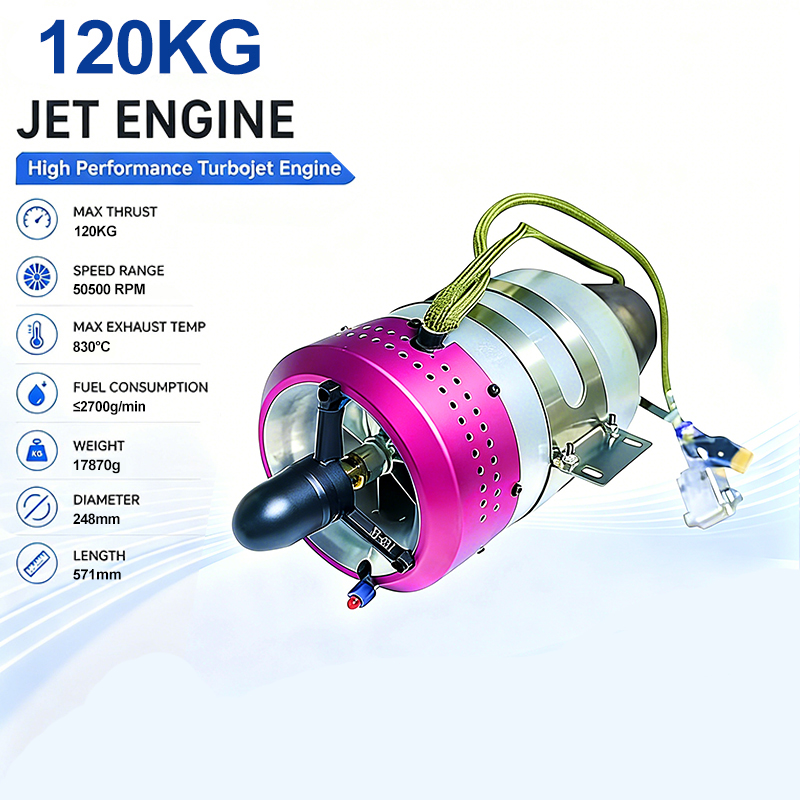
People fixate on that 120kg number first, and that’s understandable. On a standard day, sea level, 15°C, 120 kilos of push from a micro turbojet engine is a lot of muscle. It means you can hang a substantial sensor package off a 150–250kg airframe, stay airborne when the wind picks up, and still get decent transit speeds. Ten years ago you’d have needed a much bigger turbine engine to pull that off.
Here’s the thing that trips up a lot of first-time jet engine buyers, though. The thrust figure from a clean test cell never survives once the engine gets buried inside an airframe. Add a tight intake duct, a hot afternoon, a high-altitude field — it all chips away at the number. The YNX-1200A is rated for starting up at 4,500 meters, and by that altitude the air’s already thinned out by roughly 40% compared to sea level. Your available thrust isn’t going to look like the brochure shot, and that’s not a fault of the engine. It’s just what happens when you’re trying to burn fuel in thin air. This is where a good FADEC really matters. Altitude changes, temperature swings — if the fuel control can’t keep combustion stable through all that, you’ll feel it in the throttle response, or worse, in a flameout you didn’t see coming.
If there’s a single metric I’d tell anyone shopping for a micro turbojet engine to pay extra attention to, it’s thrust-to-weight ratio. YNX-1200A lands at 7.26:1 for the bare engine, 6.72:1 once you factor in the hang-on bits. For a 120kg-class unit, that’s a solid place to be. It’s naturally easier to squeeze out a higher ratio on a much smaller engine — something in the 1,200N range might push past 9:1 — but scaling physics works against you. Thrust grows, but so does the mass of casings, bearings, and rotors, and not in a friendly linear way. When you see something north of 7:1 on a 120kg-class engine, it’s a decent hint that the design team didn’t just hit “scale up” on a smaller motor. Somebody sweated the weight, and that’s exactly the kind of detail that makes life easier when you’re doing the airframe integration.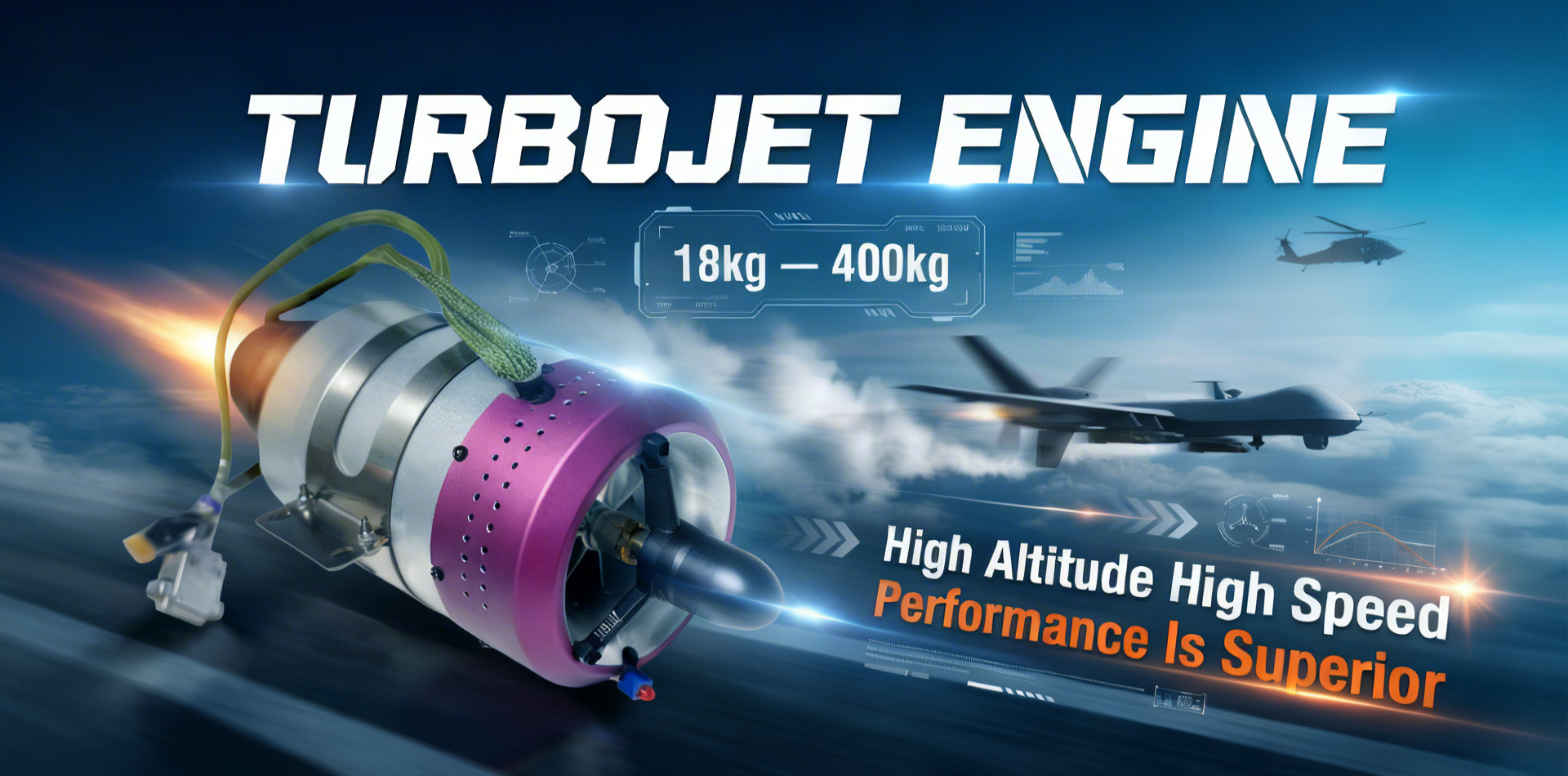
Fuel consumption: the number that determines mission feasibility
This is where a lot of purchase decisions go wrong, and it’s usually because buyers fixate on the wrong figure. The spec provided shows fuel consumption at ≤2,700g/min at maximum thrust. That‘s not an efficiency metric, it’s a flow rate. If you‘re calculating how much fuel you need to complete a mission, this is the number that matters. A typical cruise setting might burn significantly less, but you need to plan tanks around worst case.
The KP12, for comparison, lists a takeoff specific fuel consumption of ≤1.2 kg/(kgf·h), which works out to roughly 2,400g/min at 120kg thrust - fairly close to what the user‘s engine achieves.-19The YNX-1200A comes in at 1.35 kg/(kgf·h), which translates to about 2,700g/min, matching the user’s spec almost exactly.
What experienced turbine engine buyers actually do: they ask for cruise SFC specifically, not just max thrust SFC. Because a UAV that spends 80% of its mission at cruise isn‘t burning at max rate the whole time, and the difference between a well-optimized cruise curve and a poorly tuned one can mean the difference between bringing the aircraft home or watching it ditch. If a seller only gives you the max thrust number, ask for the partial-load consumption curve. If they can’t provide it, that tells you something about how thoroughly the engine‘s been characterized.
RPM, starting, and the operational stuff that trips people up
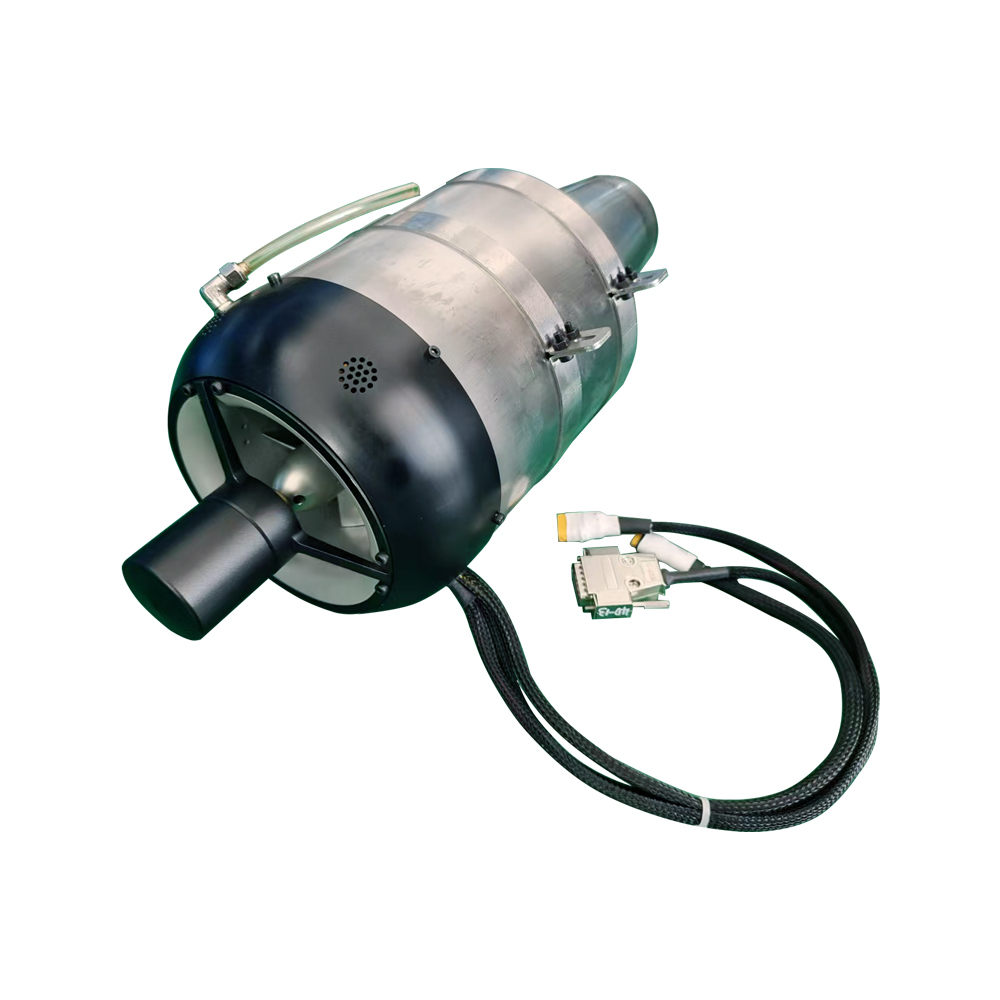
50,500 RPM at the top end — that’s the kind of speed you expect in this thrust class. Micro turbojet engines spin fast, there’s no way around it, and by now most buyers accept that.
But once you’ve run a few different turbine engines in the field, you stop staring at the peak RPM so much and start caring a lot more about something simpler: does it actually light off when you need it to, on the first try, in conditions that aren’t perfect? The YNX-1200A is set up to go from cold to idle within 60 seconds, and it’s cleared for starts up to 4,500 meters. For anyone doing military or defense work, that second part sits heavy. A slow start — or one that just won’t catch at altitude — can scrub a mission before it ever really begins.
A 60-second start window is honest for an engine of this size. It’s not claiming to be instant-on, and frankly, if someone tells you their 120kg-class micro turbojet lights off in a few seconds every time, I’d ask to see that happen on a cold morning at elevation, not in a climate-controlled test cell.
High-altitude starts are where the real sorting happens. At 4,500 meters, the air’s thinned out to about 60% of what you get at sea level. That leaves the starter motor trying to whip the compressor up to speed in air that barely wants to cooperate, and the ECU has to dribble in fuel just right — too heavy a hand and you soak the ignition, too lean and it simply won’t catch. Lots of engine companies talk about high-altitude start capability. But there’s a gap between a number that came out of a simulation and one that’s been proven across repeated tries. The YNX-1200A’s 4,500-meter starting altitude isn’t a guess — it’s been verified, and that’s the kind of thing that actually sticks when you’re planning around real weather and real terrain.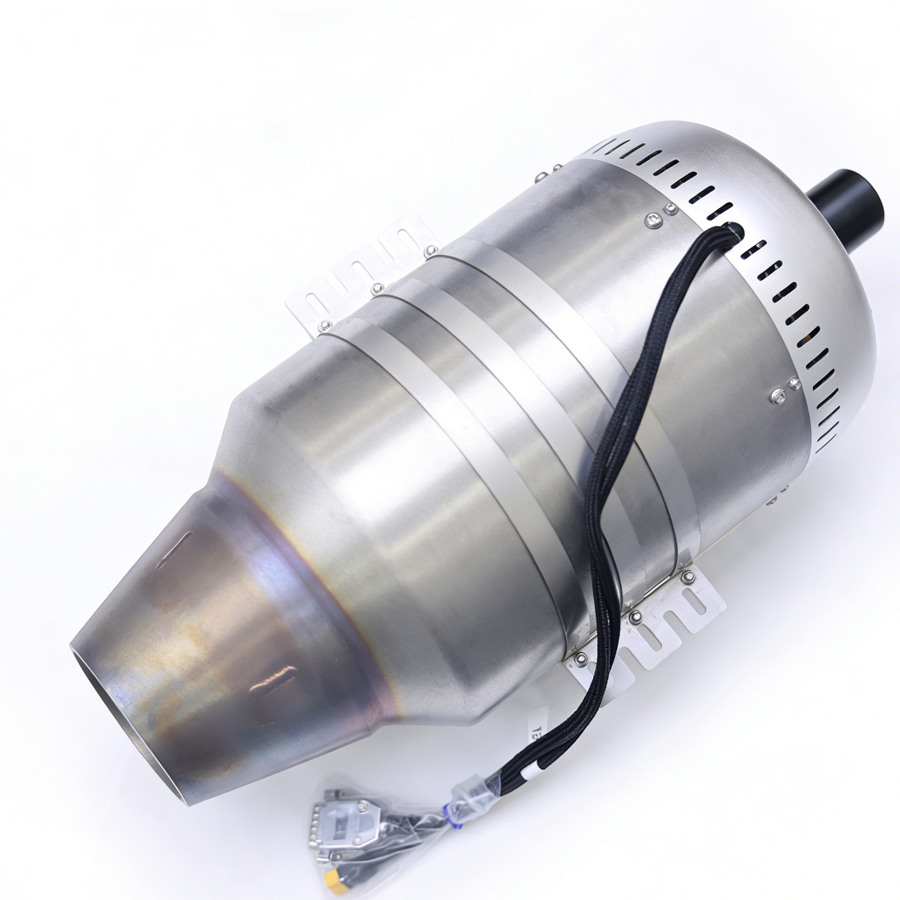
What’s actually changing in this class right now
The 120kg segment of the micro turbojet engine market is evolving fast, and a few trends are worth noting:
Brushless starter technology is becoming standard. The days of brushed starter motors that generate electrical noise and degrade over time are fading. Modern engines in this class use brushless motor designs that eliminate spark interference and extend starter life significantly - important when your flight electronics are sensitive to EMI.-3
Digital engine control is getting smarter. Current-generation ECUs aren‘t just managing fuel metering. They’re logging diagnostic data, tracking cumulative operating hours, monitoring exhaust gas temperature trends, and enabling predictive maintenance. The KT-Bus system on newer KingTech engines, for example, consolidates all parameters and timers into a single RPM sensor module with Bluetooth connectivity and app-based configuration. Expect to see more of this across the board.
Fuel compatibility is broader than ever. Most engines in this class will run on Jet A-1, kerosene, or diesel with a 5% turbine oil mix for lubrication. In a lot of places you’d actually operate these, Jet A isn’t just sitting on the shelf. Being able to burn diesel or kerosene with a splash of oil means you’re not waiting on a specialty fuel shipment before you can fly.
Altitude capability is a genuine differentiator. Not all engines claiming high-altitude performance are equal. If an engine’s been proven at 6,500 meters, you’ll see it in the data—there are usually odd little behaviours in the start logs and EGT traces that a sea-level dyno run simply doesn’t produce. A simulation model, no matter how careful, tends to gloss over those. For anyone whose missions regularly involve high-density-altitude work, my advice would be pretty simple: don’t leave altitude validation as a box to tick later. Put it near the top of the acceptance checklist, right alongside thrust and fuel consumption. It’s one of those things that’s easy to skip during procurement and impossible to ignore once you’re on site.
If you’re evaluating a purchase in this class
The market for 120kg-class turbine engines is competitive, and that‘s good for buyers. But competition also means spec sheets are optimized for comparison tables, not for reflecting operational reality.
What to actually do: Ask for a recent bench test report - ideally within the last three months. Look specifically at fuel consumption at rated thrust, thrust fluctuation range, and exhaust gas temperature stability. If a seller can’t or won‘t provide this, there are third-party testing options worth considering.
Check the total operating hours logged on the engine controller. These are harder to tamper with than airframe logs. Most micro turbojet engines have design lives in the 500-1,000 hour range, and you want units with meaningful remaining life left - preferably 60% or more.
Inspect the combustion chamber and turbine blades if you have the option. Endoscope inspection can catch chamber wall cracking, carbon buildup, or blade edge deformation that will directly impact thrust output and fuel consumption. Some of this might be negotiable in pricing; none of it should be ignored.
And if you’re operating in defense or high-stakes commercial applications, evaluate the engine‘s failure behavior, not just its MTBF. An engine that degrades predictably and fails safely - with adequate time to execute an emergency recovery - is infinitely more valuable than one with marginally better peak specs that fails without warning.
120kg of thrust opens up missions that simply weren’t practical a few years ago with this form factor. The engines are real, they‘re in production, and they’re being integrated into operational systems worldwide. The key is knowing what to look past and what to look for.